Beijing, China

Photo of Chairman Mao Zedong in front of Forbidden City in Beijing
Thursday, March 8, 2012
Wednesday, March 7
The alarm clocks rang early this morning at 6:30 am as we prepared ourselves for a busy day. Once on the bus, or "coach" as our tour guide Michelle calls it, we headed toward the Olympic Village. For the 2008 Summer Olympics, Beijing, China built two brand new facilities, The Bird's Nest and The Water Cube. The Bird's Nest was host for many different events, however, a more familiar building, The Water Cube, was host to water sports. Michael Phelps won some gold medals in this building. Let's just say there are many Phelps Phans on our trip, including our tour guide Michelle who was host to him that year. Next stop was a wholesale market. As we entered the building some eye-catchers were chicken feet, sheep heads, and a lot of commotion. The purpose of the market is for business and restaurant owners to attend and purchase products for the menus. It was interesting to see the difference in meat quality here when compared to what we have seen in our classes and what we eat back in South Dakota. Take for instance marbling (intramuscular fat), when we saw a cross-section of a loin eye there was much less marbling then I would want in my steaks, but, there are many choices for the Asian chef, nonetheless. As the time ticked by, we found ourselves in the Emporer Hospital for Femur Head Necrosis. This hospital has been around for 16 years and the head professor, Dr. Huang, has been researching this problem for around 30 years. The disease affects the head of the femur bone affecting the hip joint. The problem affects range of movement and flexibility. The hospital focuses on traditional Chinese medicine, especially herbal treatments and acupuncture, to help patients recover from the disease. No western medicine is involved meaning it is non-operative and non-invasive, however, people from countries all over the world travel here for this treatment. There are two hospitals like this in the world, the one in Beijing and another in Moscow, Russia. There is no other facility like these two in the world. We saw x-rays of effective treatment. As for further expansion, it is difficult as a lot of money is involved and to get a hospital in the USA is equally as difficult as an approval from the FDA is expensive and takes many years to receive. It was a unique experience as we felt very welcome and we realized just how welcoming a hospital like this can be if you need the help. To replenish our busy bodies, we ate a lunch buffet which included American pizza and other choices. And finally, we arrived at the biggest part of our day. We met with our pen-pals at the China Agriculture University and the Mafic students and Dr. Li the Founder and Head of Mafic. Mafic stands for Ministry of Agriculture Feed Industry Centre. Our partners were Will and Zijuan. Will is a PhD student with an emphasis swine nutrition. His project focuses on the umbilical cord blood of swine fetuses. He hopes to be able to develop a way to feed the sows a proper diet so the piglets can grow at a faster rate to increase food production around the world. He will finish his project this summer before he'll spend a year at Texas A&M University to further his research. Zijuan focuses her Masters project on lactating and gestating sows. Through her studies, she hopes to make swine nutrition during reproduction a more efficient and well-managed production cycle for the swine producer. The students met with their own partners and were given a tour of the campus of the China Agriculture University. At the University many research projects occur such as livestock metabolism and research with rats occur. Greenhouses were filled with corn research projects and I can't wait to see what China has for the agriculture industry in the future. To finish the night off, we had a banquet with our students at a restaurant near the campus. The Mafic students sat with their partners including Will and Zijuan. Some things that we found on our plates were fried chicken, head and all, flounder, whole fried fish, and delicious pastries. The Chinese food here is amazing. Move over King's Wok. It was really great to see that the lifestyles of college students in America are so similar to those in China. We made great friends with students half way around the world. A toast to Dr. Thaler. Because of the friendship he made with Dr. Li at K State University in 1989 we were able to make a friendship of a lifetime with a student who has the same interests as we have: agriculture. This wouldn't have been possible without the two of them. Tomorrow we will be visiting a hog farm, the Great Wall of China and an acrobat show. To give a sense of the day are three words: humbled, thankful, and fun.

Tuesday, March 6, 2012



March 6
The first stop of the morning took us to the 18th floor of Pioneer China's corporate conference room. Though we had personal experiences with this company in the U.S., we were surprised with the differences in doing business here. In some areas of China, the average farm size is a mu (1/6 acre), so 4,000 seed count bags are sold. With lack of wide-spread mechanization, hand planting, continuous manual labor, and land limitations under the household responsibility system, Pioneer's customers face many different challenges. We were surprised to find out Pioneer has come to China (and is succeeding) but only after many years of investment. Since 2004, their research and development here has battled intellectual property rights and government regulations before gains in market share have finally been realized. The head of Pioneer China shared this came from them bringing their best products (though knowing some would be pirated) and humbly respecting their food security goals and offering help - instead of dictating best practices. Pioneer came to China to meet needs instead of worrying about social and government issues. A surprising difference we learned was the structure of seed companies, as seed is sold to the local dealer, who sells to the retail stores in the county, who sells to the farmers. Messages between Pioneer and the farmers are lost in this long chain.
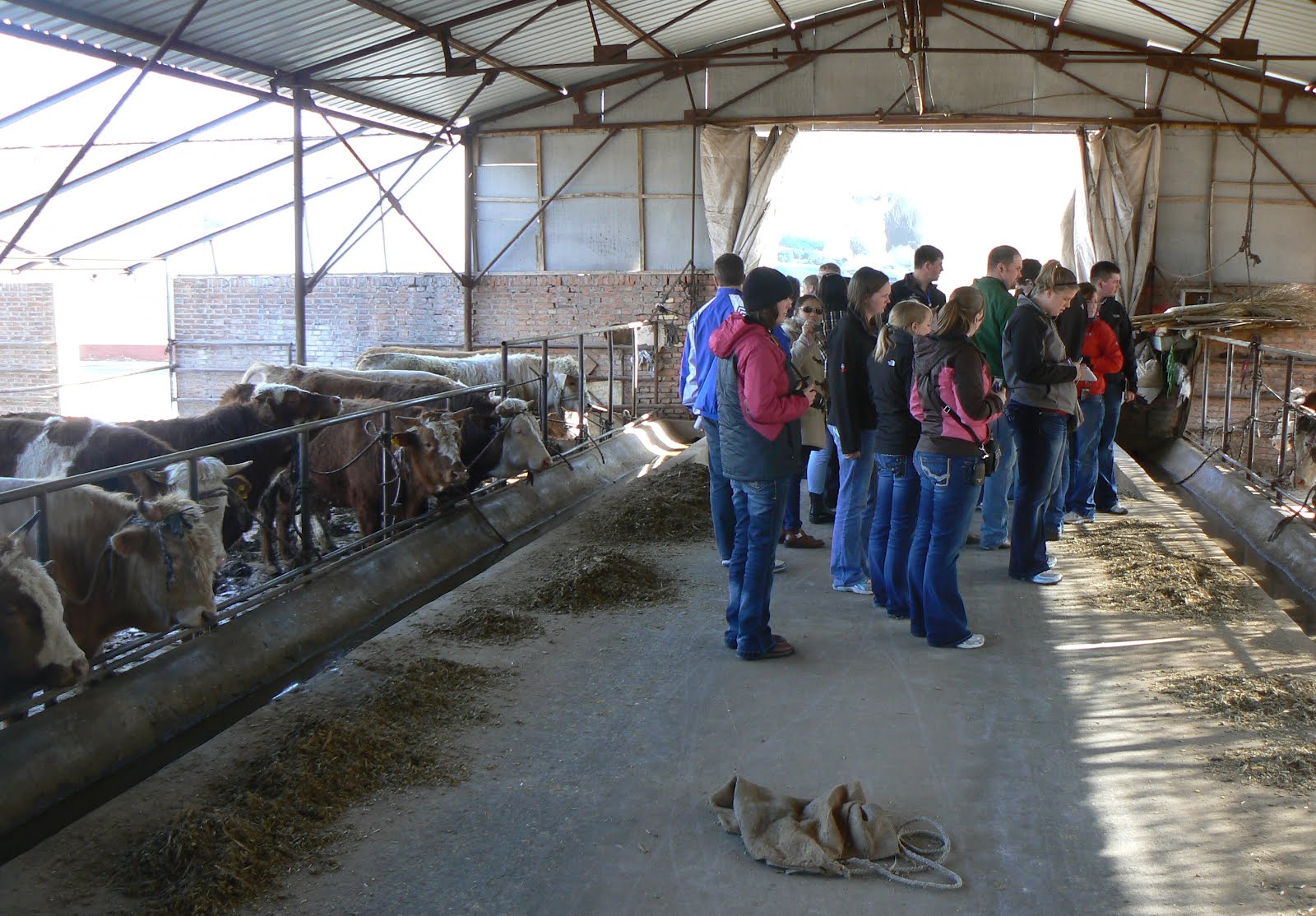
Our next host was the manager of a dairy, slaughterhouse, feedlot, and restaurants, among other ventures. His dairy operation was based on the system he had seen in MN. Through our translator, we learned the impact of foreign influence, as German machinery, New Zealand genetics, and U.S. technology all played roles on their dairy farm. We were all surprised with how comparable the operation was to where we're from. The same issues of rising feed costs and labor scarcity also affect them. However, we noticed a stark difference in how they handle vaccines and treatments of common dairy diseases. Since only certain vaccines are available, many cows are culled that would otherwise be treated in the U.S. At the slaughterhouse, less regulation and its "kosher" Muslim status interested us. This small plant processes about 400 head per day which is then sold locally. Our host then showed us the feedlot where they finish cattle to between 636-818 kilos (1400-1800 pounds). Most of the fed cattle are Simmental crossed bulls, fed corn silage and hay. For labor ease, cattle stay tied to the feed bunk - always.
Finally, we went to a "hot pot" restaurant, also owned by our host. This traditional Chinese eating experience, where a boiling pot of water sat in front of each person, was fun for each of us. We could choose what to cook on our pot, like mutton, beef, shrimp, potatoes, mushrooms, sprouts, and more. After dropping it in the pot, the food was quickly ready, so we ate it with a soy sauce seasoned with cilantro and onions. The craziest part was the shrimp - it was the whole shrimp with its head and eyes. On our way back, our wonderful Chinese tour guide, Michelle, serenaded us with a song from the Beijing summer Olympics and Peking Opera. We loved it!
Our next host was the manager of a dairy, slaughterhouse, feedlot, and restaurants, among other ventures. His dairy operation was based on the system he had seen in MN. Through our translator, we learned the impact of foreign influence, as German machinery, New Zealand genetics, and U.S. technology all played roles on their dairy farm. We were all surprised with how comparable the operation was to where we're from. The same issues of rising feed costs and labor scarcity also affect them. However, we noticed a stark difference in how they handle vaccines and treatments of common dairy diseases. Since only certain vaccines are available, many cows are culled that would otherwise be treated in the U.S. At the slaughterhouse, less regulation and its "kosher" Muslim status interested us. This small plant processes about 400 head per day which is then sold locally. Our host then showed us the feedlot where they finish cattle to between 636-818 kilos (1400-1800 pounds). Most of the fed cattle are Simmental crossed bulls, fed corn silage and hay. For labor ease, cattle stay tied to the feed bunk - always.
Finally, we went to a "hot pot" restaurant, also owned by our host. This traditional Chinese eating experience, where a boiling pot of water sat in front of each person, was fun for each of us. We could choose what to cook on our pot, like mutton, beef, shrimp, potatoes, mushrooms, sprouts, and more. After dropping it in the pot, the food was quickly ready, so we ate it with a soy sauce seasoned with cilantro and onions. The craziest part was the shrimp - it was the whole shrimp with its head and eyes. On our way back, our wonderful Chinese tour guide, Michelle, serenaded us with a song from the Beijing summer Olympics and Peking Opera. We loved it!
Monday, March 5, 2012


March 5
After flying for 17 hours and eating some airport food we finally made it to Beijing, China!!
We started out the day with breakfast at our hotel and then ventured out for a fun-filled day of learning. Our tour guide, Michelle, gave us some fun facts about Beijing.
-Population of 18 million
-5 million cars on the roads daily with limited opportunities of purchasing cars through a lottery system.
- Size is similar to New York City
-History orginated over 3000 years ago
-Beijing was originally named Pekin but was changed to Beijing in 1949
-Normal work day hours are 8:30-5:30 and school starts at 7:00
We planned on starting our day touring Tiananmen Square. However, because the National People's Congress and China's People Political Conservative Congress were meeting we only saw it from a distance. About 10,000 people were expected to attend the annual meeting, which increased police presence in the area.
The Forbidden City was our actual first stop . The Forbidden City is a expansive palace built in 1402 to house emperors. It was originally supposed to have 9,999 rooms, which is only one less than 10,000 rooms because 10 is the lucky number that symbolizes Heaven. After an actual counting, they realized it only has 8,704 rooms. As you get closer to the center of the Forbidden City we found more decorated rooms for the elite emperors. All of the buildings in the Forbidden City are decorated to represent the five elements of feng shui. Three of the buildings were named Preserving Harmony, Central Harmony, and Supreme Harmony, and all had a very specific function carried out in all of them. The buildings were consistently painted red to represent happiness and had many yellow accents to represent the earth. The Forbidden City is about 72 hectares, which is 178 acres. Although we felt like we covered the majority of those 178 acres it turns out we only walked about 1/5th of them, and much of the Forbidden City is not open to the public.
After a bus ride we made it to an older part of Beijing and got an excellent surprise!... we got to ride in a rickshaw, or commonly known as a petty cab! The rickshaw gave us a ride through a more traditional residential area of Beijing and took us to a local family's house for lunch. The husband of the house that prepared our food was the premier chef for the past president. Needless to say the food was excellent. We all had our moments but overall were successful with our chopsticks! After a short rickshaw ride back to the bus we went to the pearl market, which consisted of the jewelry, toy, and pearl market. For many of the products we had to bargain to get a fair price which proved to be a challenge for some while it came naturally to others. The market offered everything from pearls, to outdoor gear, to knock-off handbags.
We had another opportunity to practice our chopstick skills at supper. The Peking Duck, both the name of the restaurant and the meal we ate, was a fun experience topped off with fried ice cream. Overall it was a wonderful first day in Beijing and we can't wait for the many more adventures to come!!
We started out the day with breakfast at our hotel and then ventured out for a fun-filled day of learning. Our tour guide, Michelle, gave us some fun facts about Beijing.
-Population of 18 million
-5 million cars on the roads daily with limited opportunities of purchasing cars through a lottery system.
- Size is similar to New York City
-History orginated over 3000 years ago
-Beijing was originally named Pekin but was changed to Beijing in 1949
-Normal work day hours are 8:30-5:30 and school starts at 7:00
We planned on starting our day touring Tiananmen Square. However, because the National People's Congress and China's People Political Conservative Congress were meeting we only saw it from a distance. About 10,000 people were expected to attend the annual meeting, which increased police presence in the area.
The Forbidden City was our actual first stop . The Forbidden City is a expansive palace built in 1402 to house emperors. It was originally supposed to have 9,999 rooms, which is only one less than 10,000 rooms because 10 is the lucky number that symbolizes Heaven. After an actual counting, they realized it only has 8,704 rooms. As you get closer to the center of the Forbidden City we found more decorated rooms for the elite emperors. All of the buildings in the Forbidden City are decorated to represent the five elements of feng shui. Three of the buildings were named Preserving Harmony, Central Harmony, and Supreme Harmony, and all had a very specific function carried out in all of them. The buildings were consistently painted red to represent happiness and had many yellow accents to represent the earth. The Forbidden City is about 72 hectares, which is 178 acres. Although we felt like we covered the majority of those 178 acres it turns out we only walked about 1/5th of them, and much of the Forbidden City is not open to the public.
After a bus ride we made it to an older part of Beijing and got an excellent surprise!... we got to ride in a rickshaw, or commonly known as a petty cab! The rickshaw gave us a ride through a more traditional residential area of Beijing and took us to a local family's house for lunch. The husband of the house that prepared our food was the premier chef for the past president. Needless to say the food was excellent. We all had our moments but overall were successful with our chopsticks! After a short rickshaw ride back to the bus we went to the pearl market, which consisted of the jewelry, toy, and pearl market. For many of the products we had to bargain to get a fair price which proved to be a challenge for some while it came naturally to others. The market offered everything from pearls, to outdoor gear, to knock-off handbags.
We had another opportunity to practice our chopstick skills at supper. The Peking Duck, both the name of the restaurant and the meal we ate, was a fun experience topped off with fried ice cream. Overall it was a wonderful first day in Beijing and we can't wait for the many more adventures to come!!


March 3 and 4
We got our trip off to a great start this morning. Everybody checked-in at the Sioux Falls Airport ahead of schedule, no one got bumped, and every flight was on time with minimal lay-over. People got varying amounts of sleep on the 13 hour flight from Detroit to Beijing, and I’m guessing we’ll be able to see tomorrow who slept on the plane and who didn’t! The only excitement on the flight was when Megan Smith (MS in Dairy Science) got to use her EMT training and help the stewardesses with a passenger who had fainted. Way to go, Megan!
We arrived at the Beijing International Airport 35 minutes early, cleared Immigration with no issues, and picked up all our luggage. Randy Lu, our host in China, greeted us once we got through Customs and then we all loaded onto a bus for the 45 minute trip to the Sunworld Hotel. Everyone got checked into their rooms before midnight and are hopefully going to get some sleep before their first day in China starting off with the Forbidden City.
This is the last blog I’ll write. Starting tomorrow, all the daily blogs will be written by the students, and you’ll get to see our trip through their eyes. Thank you to everybody who helped support our students on this trip. They are an exceptional group of Jackrabbits, and will come back on March 16th looking at the world a little differently.
Dr. Bob Thaler
We arrived at the Beijing International Airport 35 minutes early, cleared Immigration with no issues, and picked up all our luggage. Randy Lu, our host in China, greeted us once we got through Customs and then we all loaded onto a bus for the 45 minute trip to the Sunworld Hotel. Everyone got checked into their rooms before midnight and are hopefully going to get some sleep before their first day in China starting off with the Forbidden City.
This is the last blog I’ll write. Starting tomorrow, all the daily blogs will be written by the students, and you’ll get to see our trip through their eyes. Thank you to everybody who helped support our students on this trip. They are an exceptional group of Jackrabbits, and will come back on March 16th looking at the world a little differently.
Dr. Bob Thaler
Subscribe to:
Posts (Atom)